Free Shipping Over $80
Easy Return Within 30 Days
24/7 Online Live Chat




My Bag

Half of the "crystals" sold in stores are fake?
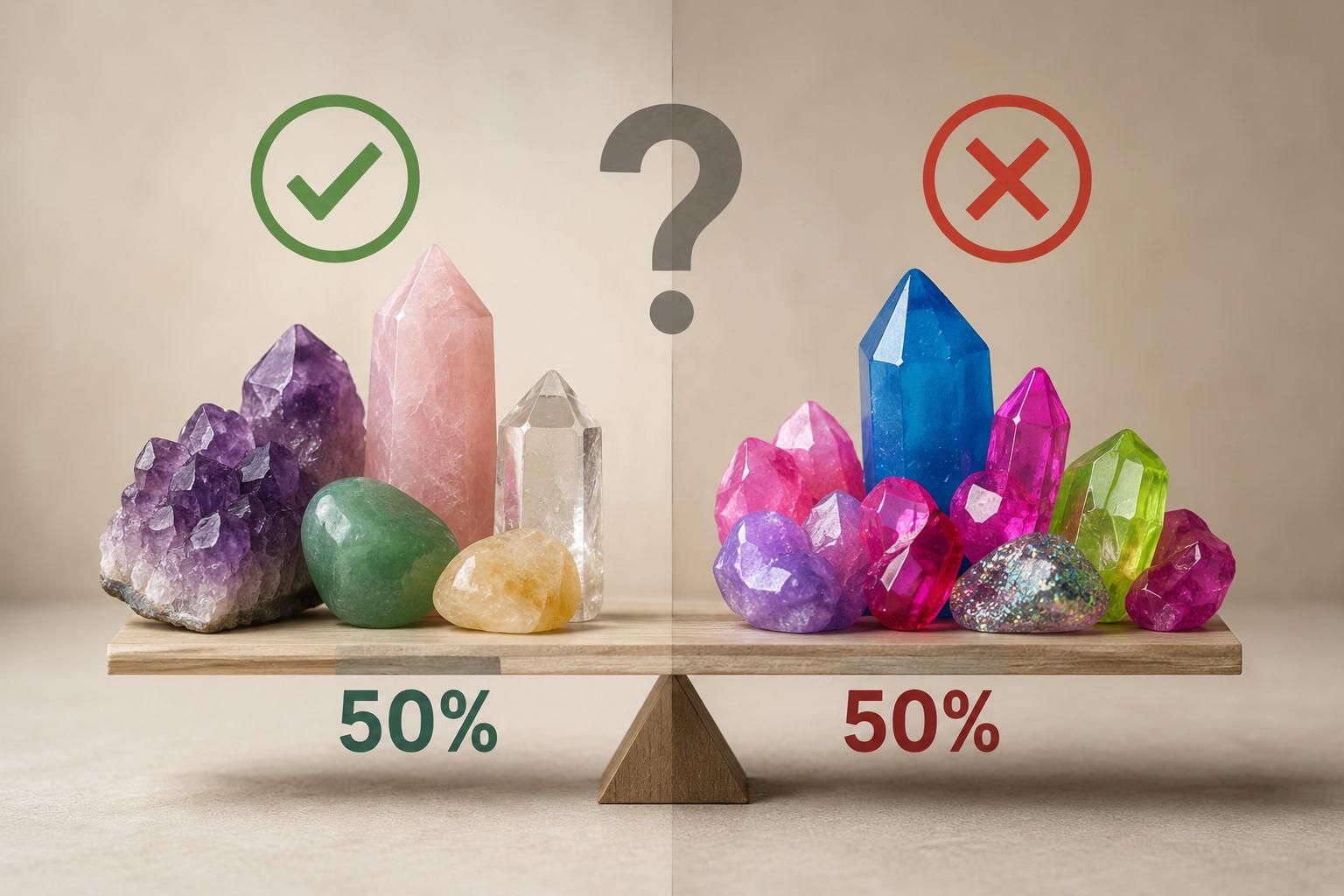
That sentence sounds like clickbait exaggeration, but unfortunately — it isn't much of an exaggeration at all.
In the crystal jewelry industry, phenomena like "passing off inferior goods as good ones," "dyeing to imitate," and "glass imitations" are far more common than most people imagine. Today, we're not going to beat around the bush — we'll show you directly the most common "fake crystal" tricks on the market, along with a few simple identification methods that anyone can learn.
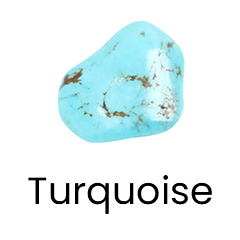
🩵 Turquoise: The Type of Crystal Most Likely to "Trip You Up"
If we were to rank the "worst offenders" for fakes, turquoise would undoubtedly take first place.
Genuine turquoise deposits are rare and costly to mine, so authentic high-quality turquoise is never cheap. As a result, a "budget alternative" has appeared on the market — natural howlite or magnesite dyed blue-green to pass off as turquoise. The industry even has a specific name for it: "Turquenite" (imitation turquoise).
Howlite is naturally whitish with dark natural veining, and once dyed, its veining looks almost identical to real turquoise, making it very hard to distinguish with the naked eye. Some industry estimates suggest that as much as 80% of the "turquoise" jewelry circulating on the market is actually dyed howlite rather than genuine natural turquoise.
Simple identification method: Gently rub an inconspicuous crevice with a cotton swab dipped in acetone (nail polish remover). If color transfers onto the swab, it's essentially confirmed to be a dyed imitation.
🌙 "Moonstone Glass" (Opalite): A "Natural Crystal" That Doesn't Actually Exist
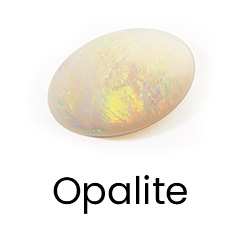
Many people have seen a milky-white "crystal" with a faint bluish-purple glow on the market, often labeled as "opal" or "moonstone glass" (Opalite).
But the truth is: Opalite has never been a natural mineral — it is 100% man-made glass, and no such mineral exists in nature at all. It isn't pretending to be a specific real mineral; it's more like a product that was "invented out of thin air." By itself, it doesn't have the intent to deceive people about any particular mineral, but many sellers deliberately blur the line between "natural" and "artificial" when marketing it, leading consumers to mistakenly believe they're buying a natural crystal.
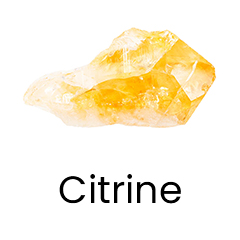
💛 Citrine: What You Bought Was Probably "Baked" Amethyst
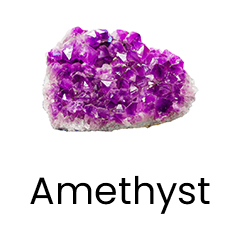
We've mentioned this before in one of our trivia articles: natural citrine is actually extremely rare. The vast majority of citrine jewelry on the market is actually amethyst (or smoky quartz) that has been heat-treated to change color.
This heat treatment has long been an open "unspoken rule" within the industry — so common, in fact, that many reputable sellers will specifically label their products as "natural citrine" to distinguish them from heat-treated ones. This itself indirectly reveals that "treated citrine" is actually the market mainstream.
🟢 Moldavite: Rare Genuine Pieces, But Fakes Are "Everywhere"
As we've mentioned before, genuine moldavite (Czech tektite) is only found in a small region of Central Europe, with extremely limited reserves — which is why prices remain high. Because of this, the market has been flooded with green glass imitations of "moldavite," deliberately given a pitted texture to mimic the unique appearance of the real thing that's been melted by extreme heat.
Simple identification method: The surface texture of genuine moldavite is irregular, with varying depths; glass imitations, on the other hand, tend to be too smooth and uniform, often with visible air bubbles inside. Also, if the price seems unbelievably cheap, that's basically a sign it's not the real thing.
✨ "Cherry Quartz" and "Aura Crystals": Glass or Coatings, From Start to Finish
Besides the types of "impersonation" fakes mentioned above, there's another whole category of products on the market that are outright man-made glass from the start — such as the common "cherry quartz" (actually red glass containing copper particles) and "goldstone" (blue or brown glass containing copper flecks).
There's also a category called "Aura Quartz": its base is indeed genuine natural crystal, but the surface has an additional layer of metallic coating applied to it, giving it that dreamy rainbow shimmer. This treatment isn't inherently deceptive — but the problem is that many sellers deliberately fail to disclose the "coating treatment" information, leading consumers to mistakenly believe they're buying a purely natural, untreated crystal.
🔍 Three Simplest Identification Tricks
You don't need professional equipment — ordinary people can try these methods when shopping:
Feel the temperature: Natural crystal conducts heat well, so it feels noticeably cool when held and warms up slowly; glass and plastic, on the other hand, quickly warm up to match body temperature.
Look for bubbles: Examine the interior carefully — if you see evenly distributed small round bubbles, it's basically glass. Natural crystals typically contain irregular cracks or cloud-like inclusions, not round bubbles.
Look at color distribution: Natural crystal colors are usually uneven, with natural color banding or a cloudy appearance; if the color is unnaturally uniform and the saturation seems too perfect, it's likely dyed or synthetically produced.
💎 At iFamilyBuy, Every Piece You Buy Can Withstand Close Scrutiny
Now that you know these "tricks," we hope that when choosing a crystal bracelet, you'll have a bit more judgment and a lot less risk of being "ripped off."
At iFamilyBuy.com, we know how important trust is in this industry — every crystal is carefully vetted by our team before it goes up for sale, and we honestly disclose on our product pages whether an item has been dyed, heat-treated, or coated — no vague language, no hiding the truth. After all, a crystal truly worth wearing for a lifetime must first and foremost be real. ✨
Have you ever bought a "fake crystal" that left you laughing and crying at the same time? Share your "trap" stories in the comments below!

Subscribe for exclusive deals and early access to new arrivals, straight to your inbox. By signing up, you agree to our Privacy Policy
 Free Shipping
On Orders $80+
Free Shipping
On Orders $80+
 Easy Return
Within 30 Days
Easy Return
Within 30 Days
 24/7 Online
Live Chat
24/7 Online
Live Chat

Order ID:
Order Time:
Logistics Information: